Operations
Soiling in the Valley: when to wash an array and when not to
Dust is the largest recoverable loss on most San Joaquin Valley arrays. Washing on a calendar wastes money in both directions.

Why here is different
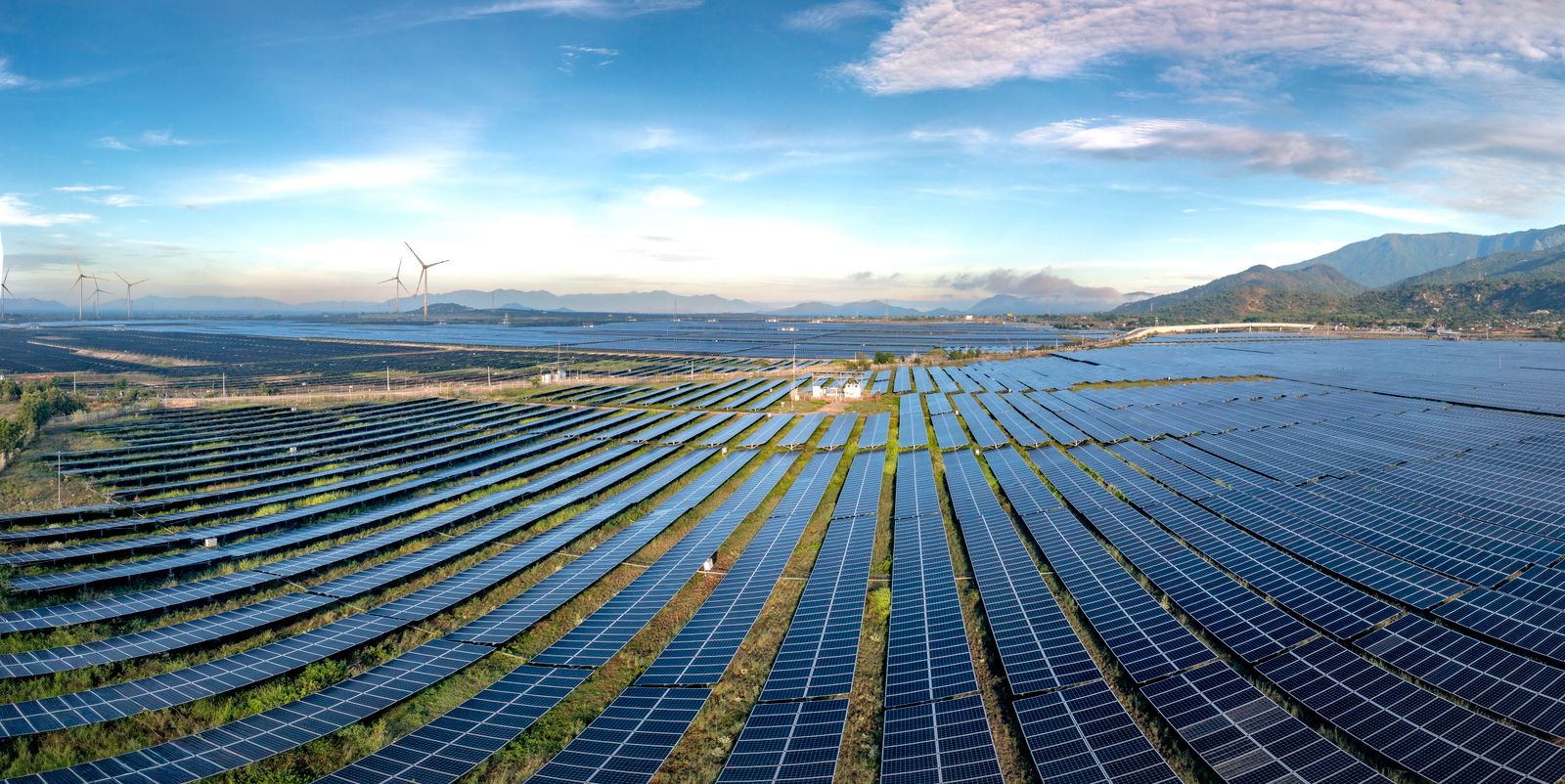
The San Joaquin Valley combines three things that are individually manageable and collectively expensive: a dry season running from roughly May to October, intensive agricultural activity, and a great deal of unpaved surface.
Dust settles on glass and stays there until something washes it off. In a climate with regular summer rain that happens naturally. Here it does not happen for months at a time, right through the period when the array should be producing most.
The result is a loss that builds gradually and invisibly. Nobody notices a slow decline in output. They notice a step change, and soiling never produces one.
The uniform film and the edge band
Soiling has two distinct components and they behave completely differently. A uniform film across the glass reduces the light reaching every cell proportionally, so output falls smoothly and predictably.
The edge band is worse. Dust and residue accumulate along the lower edge of each module, particularly on tilted arrays where runoff carries particles down and leaves them at the frame. A heavily soiled band across the bottom cells can push that cell string into bypass, which costs a disproportionate share of the module's output for a small area of dirt.
This is why a visual inspection is a poor guide. An array that looks evenly dusty and an array with a heavy bottom band can look similar from the ground and perform very differently.
Measuring rather than guessing
The honest way to schedule washing is to measure the loss. We compare weather-corrected expected output against metered actual, continuously. As soiling builds, the gap widens in a characteristic slow ramp that looks nothing like a fault.
When the accumulated loss, valued at your tariff, exceeds the cost of a wash, we wash. When it does not, we wait. Sites vary enormously: an array beside an unpaved farm road needs washing far more often than one in a paved municipal lot two miles away.
It also means we can tell you what a wash bought. Expected-versus-actual before and after gives a recovery figure, not a hopeful assertion.
What to avoid
Do not wash with hard water and let it dry on the glass. Mineral deposits are harder to remove than the dust you just took off, and repeated cycles leave a haze that no amount of rinsing fixes.
Do not use abrasive brushes or aggressive detergents. Module glass has anti-reflective coatings that can be damaged, and damaging them costs more output permanently than the soiling was costing temporarily.
Do not wash on a fixed quarterly calendar regardless of conditions. Half the washes will be too late to prevent the loss and half will be too early to be worth paying for.
- Measure soiling as a weather-corrected performance gap, not by looking at the glass.
- Wash when the recovered kilowatt hours are worth more than the wash.
- Pay attention to the lower edge band. It costs more than its area suggests.
- Use deionised or soft water and a soft brush. Protect the anti-reflective coating.
This is a demonstration website. Figures quoted in this article are illustrative.