Ground-mount on ground that is already idle
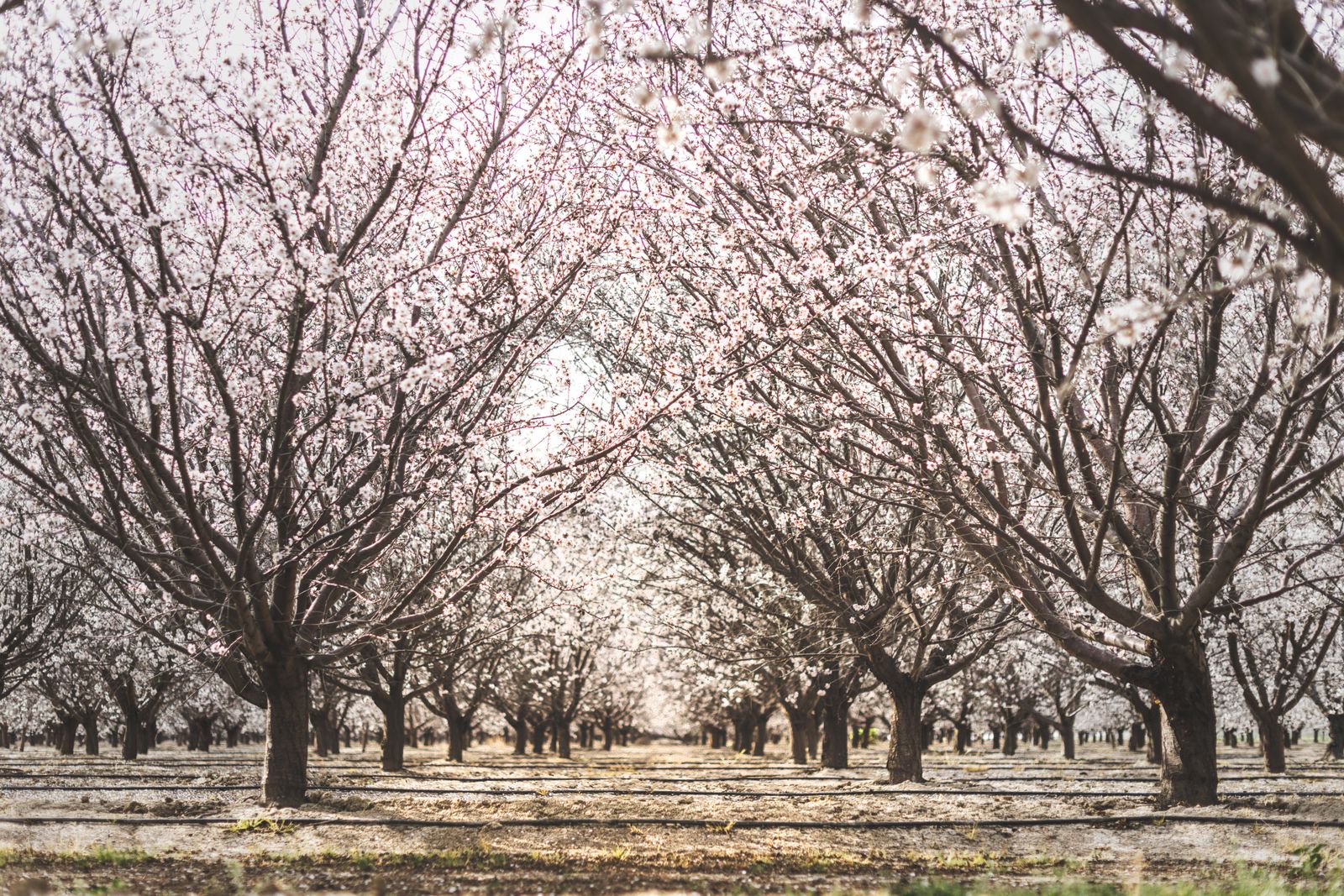
Fallowed corners and low-yield blocks carry an array without taking a productive acre out of the rotation.
Commercial solar EPC since 2014
Kern County / Tulare County / Kings County / Fresno County
(661) 555-0183Industry
An irrigation account is the most seasonal load on the grid. Pumps run hard from spring through harvest and then the meter goes quiet for months, which makes the annual kWh total almost useless as a design input.
The load
A 200 horsepower deep-well pump draws roughly 150 kW when it is running. Whether it runs for 400 hours a year or 3,000 changes the answer completely, and only the interval data knows. We start every agricultural project by pulling it.
Static water level matters as much as horsepower. As the lift increases, the same pump moves less water for the same energy, and the acre-feet per kWh figure quietly worsens year over year. Any long-range model that ignores drawdown is optimistic by design.
Seasonality pushes agricultural solar towards annual netting rather than monthly matching. The array over-produces in winter against a small load, banks the value, and draws it down through the irrigation season. How well that works depends entirely on the tariff and the export arrangement, which is why we model your specific schedule rather than a generic one.
Land is the other advantage. Fallowed corners, ground taken out of production by water allocation, and the strip beside a canal are all candidate sites, and ground-mount lets us choose the tilt and azimuth rather than inheriting a roof.
Load inventory
| Load | Behaviour |
|---|---|
| Deep-well turbine pumps | 75 to 400 hp, the dominant load, often several per parcel on separate meters |
| Booster and filter stations | Drip and micro-sprinkler systems need pressure maintained through the set |
| Frost protection | Short, intense wind-machine and sprinkler runs on cold spring nights |
| Shop, cold room and office | Small compared with pumping, but year-round and useful for winter self-consumption |
| Harvest equipment and conveyors | Concentrated in a few weeks, capable of setting an annual demand peak |
How we approach it
Fallowed corners and low-yield blocks carry an array without taking a productive acre out of the rotation.
Pumps often run long into the afternoon, which can justify pushing the array west of due south.
Ranches commonly have several service points. We model them together and design per meter, since generation cannot cross a meter boundary without the utility's involvement.
With the right arrangement the low-load winter months build value that the irrigation season draws back down.
Answers
Not covered here? Our engineers answer directly, not through a call centre.
Ask a question(661) 555-0183Often yes, but the arrangement matters more than the array. A seasonal load needs an export or netting arrangement that carries winter value into summer. We model your specific rate schedule before recommending a size.
Agrivoltaics is real but crop-specific and equipment-limited. Raised rows with sheep grazing underneath are the most practical version on Valley sites. Row crops with full machinery clearance are much harder.
Solar on contracted agricultural land has specific county-level rules, including limits tied to serving on-farm load. It is a real constraint and we check it during site screening rather than at permit.
To the meters. Each service point is modelled separately, because generation on one meter does not offset consumption on another unless a utility aggregation arrangement applies.
Every project starts with twelve months of interval data and a load shape. The array comes after that, sized to what you actually use.
CSLB #1071482 (sample). Prevailing wage on public works. Engineers answer, not a call centre.
We value your privacy
We use cookies to run this site, remember your preferences and understand how it is used.Cookie policy