Uses land you already pay for
No acreage comes out of production and no lease is signed. The roof carries the array and the array carries the bill.
Commercial solar EPC since 2014
Kern County / Tulare County / Kings County / Fresno County
(661) 555-0183Solution
A flat commercial roof is the cheapest land you will ever own. It is also a structure with a service life, a membrane warranty and a crowded parapet, so the design starts with the roof, not the array.
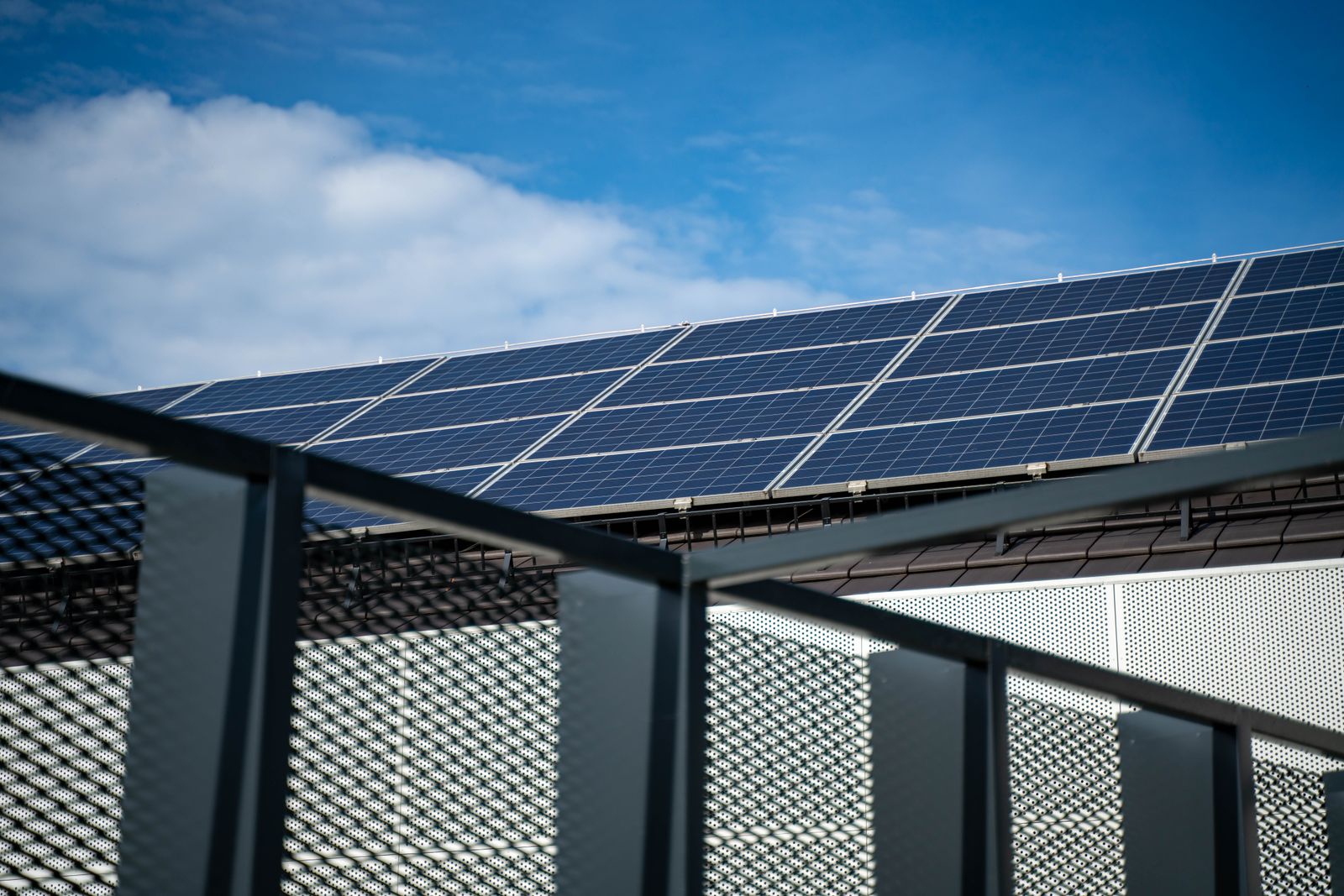
Overview
Most Valley roofs we survey are single-ply TPO over rigid insulation on a steel deck, with ten to twenty years of membrane life left. On those we ballast: a fully ballasted racking system in the 5 to 10 degree tilt range, laid out in east-west or south-facing rows depending on how the building sits and what the utility bill looks like across the day.
Where the structure is tight, we attach. Kern County sits in a wind-borne debris and seismic environment that punishes assumptions, so every layout is run against ASCE 7 wind uplift and seismic loads for the actual address, and we send the structural calculations to a California-licensed civil or structural engineer before the array touches the roof.
Dead load is the number that kills projects late. A ballasted array typically adds 3.0 to 5.5 lb per square foot once ballast blocks are counted, and older tilt-up buildings with long bar-joist spans do not always have that capacity spare. We check it in week one, not at permit.
Scope of supply
Sequence
We pull twelve months of 15-minute interval data from the utility and spend a day on the roof with a tape, a drone and a moisture meter.
Array layout, ballast plan and dead-load calculation go to the structural engineer with the drone survey and the as-built drawings.
Plan set to the AHJ, Rule 21 application to the utility, both filed the same week so the two clocks run in parallel.
Racking and modules staged in our Bakersfield yard, then a two to six week install window scheduled around your operating hours.
AHJ final, utility witness test where required, permission to operate, then monitoring credentials and the O&M schedule.
Why it works
No acreage comes out of production and no lease is signed. The roof carries the array and the array carries the bill.
Generation and consumption share a service, so more of every kWh is consumed on site rather than exported at a lower credited value.
If the membrane has under eight years left, we sequence the reroof first and the array second so you never pay to remove a new system.
Walkways, hatch clearance and unit access are designed in, so your HVAC contractor can still do their job in August.
What moves the price
| Factor | Effect on the project |
|---|---|
| Membrane age and warranty | Under 8 years remaining usually triggers a reroof-first sequence and changes the schedule more than the price |
| Structural capacity | A tight roof pushes you from ballasted to attached racking, which adds penetrations, flashing and cost |
| Rooftop equipment density | Packed curbs and ducts cut usable area and force module-level electronics on the shaded strings |
| Service and switchgear capacity | An NEC 705.12 busbar limit can force a line-side tap or a service upgrade, which is a long-lead item |
| Parapet height and setbacks | Fire-service pathways and setbacks remove usable rows at the perimeter, typically 6 to 12 percent of gross roof area |
Often paired with
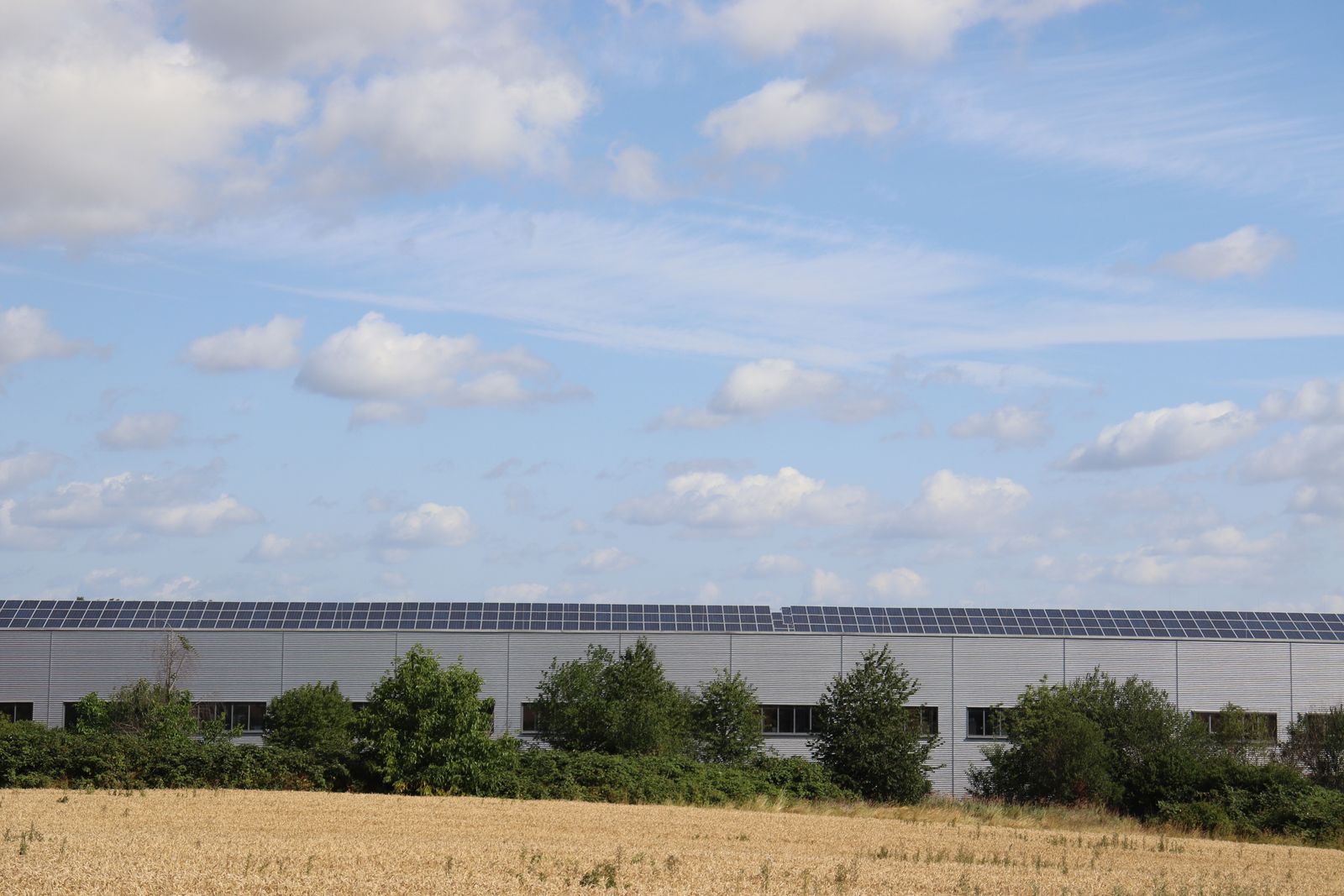 Solar roofing and reroof coordinationSequencing a new membrane underneath a system that has to last 25 years.Open
 Battery storage and demand managementDemand shaving, time-of-use shifting and backup for the circuits that matter.Open
 Monitoring and O&MInverter-level telemetry, scheduled washing and warranty claims that get paid.Open
Answers
Not covered here? Our engineers answer directly, not through a call centre.
Ask a question(661) 555-0183Not if the membrane manufacturer is in the conversation before the design is fixed. We involve them during design, use approved attachment or ballast details, and hand you the documentation. On ballasted systems with slip sheets the warranty is usually continued without change.
As a working figure, allow roughly 70 to 80 square feet of usable roof per installed kW DC for a ballasted array at low tilt, once walkways, setbacks and equipment clearances are removed. A 400 kW system therefore wants about 30,000 usable square feet, not 30,000 gross.
Cooler. The modules shade the membrane through the afternoon. Measured roof-surface temperatures under arrays run noticeably lower than the exposed field, and on older insulation that shows up as a small reduction in cooling load.
Ballasted arrays come off in sections and go back on. Budget for the remove-and-reset labour when you plan the reroof, which is exactly why we ask about membrane age at the first meeting.

Every project starts with twelve months of interval data and a load shape. The array comes after that, sized to what you actually use.
CSLB #1071482 (sample). Prevailing wage on public works. Engineers answer, not a call centre.
We value your privacy
We use cookies to run this site, remember your preferences and understand how it is used.Cookie policy